Class B CDL Training in DeSoto, TX
Train for Class B Commercial Driving With ConfidenceA Class B CDL can help students prepare for commercial driving opportunities involving single commercial vehicles such as straight trucks, box trucks, dump trucks, buses, delivery vehicles, municipal vehicles, and other Class B vehicles.
MT Training Center’s Class B CDL Training in DeSoto, TX helps students build the knowledge, safety awareness, and hands-on driving skills connected to the Texas Class B CDL process. The program focuses on ELDT theory, pre-trip inspections, air brakes, basic control skills, road safety, vehicle handling, and Texas DPS CDL exam preparation.
For students searching for Class B CDL training programs or a Class B CDL school near Dallas-Fort Worth, MT Training Center offers a focused training option in DeSoto, TX.
Start Moving Toward a Commercial Driving Career
Many students choose Class B CDL training because they want a practical, career-focused path that does not require years in school. They want training that is clear, structured, hands-on, and connected to real commercial driving requirements.
The Class B CDL path may be a strong fit for students who want to operate single commercial vehicles and prepare for local, regional, municipal, delivery, passenger, or service-based driving opportunities.
MT Training Center helps students move from uncertainty to preparation by providing a structured program focused on safety, inspection skills, driving fundamentals, and CDL exam readiness.
Training Connected to Federal ELDT Requirements
CDL training is tied to important state and federal requirements. Entry-Level Driver Training, commonly known as ELDT, applies to first-time CDL applicants who are preparing for a Class A or Class B commercial driver’s license.
MT Training Center’s Class B CDL Training program includes training connected to ELDT theory, commercial vehicle safety, inspections, driver responsibilities, and preparation for the Texas DPS CDL testing process.
This page does not promise CDL approval or employment. It explains the training foundation students can use to prepare for the required Class B CDL path and entry-level commercial driving opportunities.
Training Built Around the Class B CDL Path
A Class B CDL is different from a Class A CDL. Class B training focuses on single commercial vehicles rather than tractor-trailer combination vehicles.
That difference matters. Students need training content that matches the license they are pursuing.
MT Training Center’s Class B CDL Training program is designed to help students prepare for the knowledge and skills connected to Class B commercial driving, including vehicle inspections, air brakes, safety procedures, basic control skills, road awareness, and driver responsibilities.
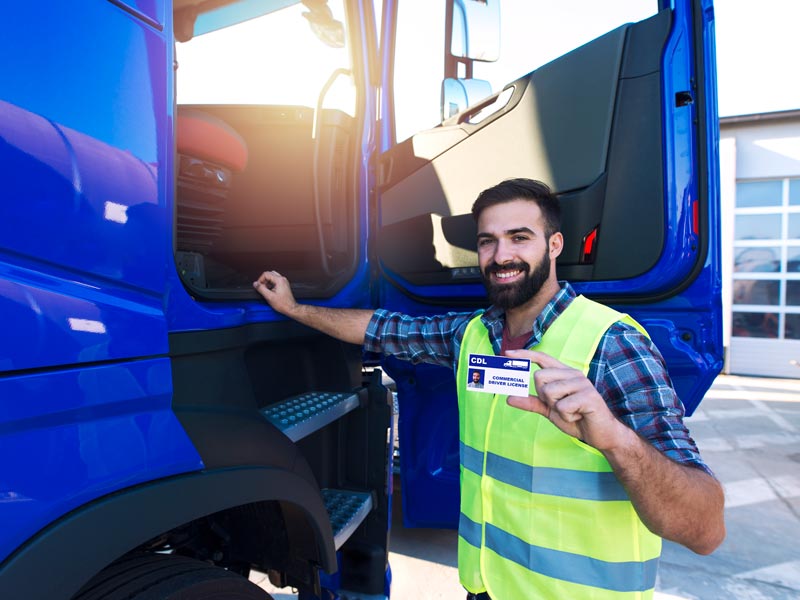
Why Choose Class B CDL Training?
Class B CDL training is a practical option for students who want a focused commercial driving path. It can support opportunities involving vehicles used by schools, municipalities, delivery companies, construction support teams, utility services, waste management providers, passenger transportation companies, and local business operations.
MT Training Center’s Class B CDL Training Program helps students develop the knowledge and hands-on skills needed to approach the Class B CDL process with greater confidence.
This program helps students learn about:- Entry-Level Driver Training theory
- Commercial vehicle safety
- Pre-trip and post-trip inspections
- Air brake systems
- Basic control skills
- Backing and maneuvering
- Road safety and defensive driving
- Hazard awareness and emergency response
- Work zone and railroad crossing awareness
- Driver paperwork and compliance
- Human trafficking awareness
- Texas DPS CDL exam preparation
For students who want a shorter, focused vocational training path, Class B CDL training can be a practical way to begin preparing for commercial driving.
Who This Program Is For
The Class B CDL Training program may be a strong fit if you:
- Want to earn a Class B CDL in Texas
- Want training for single commercial vehicles
- Are interested in local or regional driving opportunities
- Want structured ELDT and behind-the-wheel preparation
- Need help learning pre-trip inspection and basic control skills
- Want to prepare for Texas DPS CDL testing requirements
- Prefer a focused CDL training path
- Are interested in straight trucks, box trucks, dump trucks, buses, or similar Class B vehicles
- Want a Class B CDL school in DeSoto, TX
- Are looking for CDL Class B training near Dallas-Fort Worth
This program is especially valuable for students who want practical driver training with defined clock hours, a clear schedule, and a direct focus on Class B CDL preparation.
What You Will Learn in the Class B CDL Training Program
| Class B CDL Training Area | Skills, Knowledge, and CDL Preparation |
|---|---|
| ELDT Theory |
Students begin with Entry-Level Driver Training theory, which introduces important knowledge areas for first-time CDL applicants. This training helps students understand commercial driving responsibilities, safety expectations, operating procedures, inspections, driver awareness, and regulatory topics connected to CDL preparation. |
| Commercial Vehicle Safety |
Safety is the foundation of commercial driving. Students learn about safe vehicle operation, driver responsibility, roadway awareness, hazard recognition, and the importance of making responsible decisions before and during vehicle operation. |
| Pre-Trip and Post-Trip Inspections |
Vehicle inspection is one of the most important skills for CDL drivers. Students learn how to approach pre-trip and post-trip inspections, identify key vehicle components, understand inspection procedures, and build confidence in the inspection process required for commercial driving. |
| Air Brakes |
Many Class B commercial vehicles use air brake systems. Students learn air brake concepts, system awareness, inspection points, and safety procedures connected to operating vehicles with air brakes. This section helps students understand how braking systems affect safety, control, and CDL readiness. |
| Basic Control Skills |
Students are introduced to basic vehicle control skills used in Class B commercial driving. Training may include vehicle positioning, steering control, turning, stopping, lane awareness, backing, and maneuvering in controlled training environments. |
| Backing and Maneuvering |
Backing and maneuvering require patience, awareness, and repetition. Students learn how to approach commercial vehicle movement with attention to space, mirrors, control points, safety, and smooth handling. |
| Road Safety and Defensive Driving |
Students learn roadway safety concepts, defensive driving habits, speed management, space management, hazard awareness, and safe decision-making. This helps students understand how commercial driving requires focus, judgment, and responsibility at all times. |
| Hazard Awareness and Emergency Response |
Commercial drivers must be prepared to identify risks and respond calmly. Students learn about hazard recognition, emergency awareness, vehicle control considerations, and safer responses to changing roadway conditions. |
| Railroad Crossings and Work Zone Awareness |
Class B drivers may operate in city, suburban, industrial, and work zone environments. Students learn safety concepts related to railroad crossings, construction zones, traffic flow, signage, spacing, and roadway hazards. |
| Driver Paperwork and Compliance |
Commercial driving includes more than operating a vehicle. Students are introduced to driver paperwork, compliance concepts, documentation, and professional responsibilities connected to the transportation industry. |
| Human Trafficking Awareness |
Students receive awareness training connected to human trafficking recognition and reporting responsibilities. This topic supports broader safety awareness and responsible conduct within the transportation industry. |
| Texas DPS CDL Exam Preparation |
The program helps students prepare for the written and driving portions connected to the Texas DPS CDL process. Students are expected to build both knowledge and practical skill so they can approach the Class B CDL testing process with a stronger foundation. |
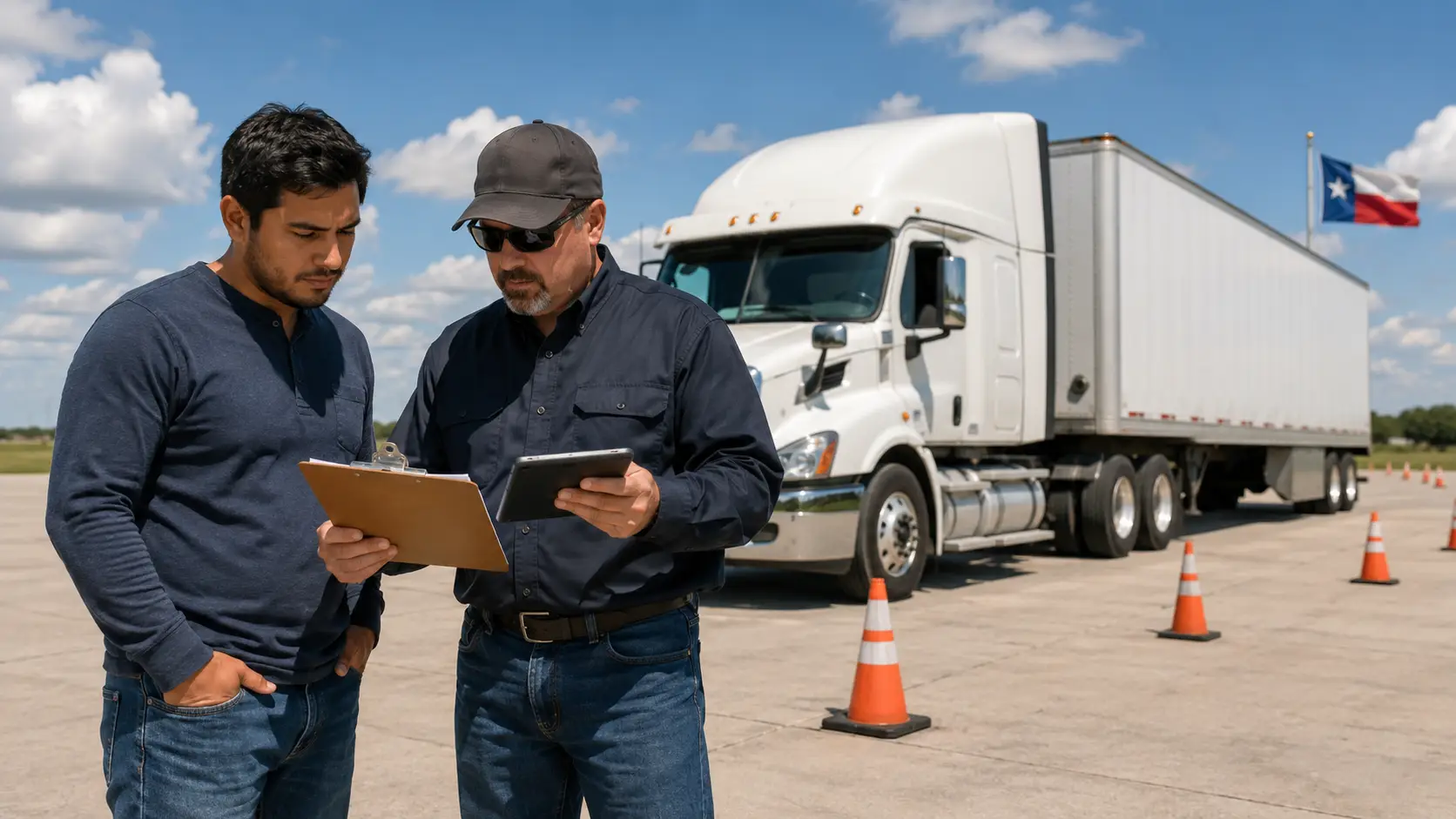
Build Confidence Before the CDL Skills Test
Class B CDL training requires more than memorizing rules. Students must learn how to inspect a commercial vehicle, understand safety systems, control the vehicle, manage space, complete maneuvers, and respond to real driving conditions.
MT Training Center gives students a structured training environment where they can begin developing those skills through instruction, guided practice, and focused preparation.
From ELDT theory and inspections to air brakes, basic control skills, and road safety, the program is built to help students become more confident before moving through the required Texas CDL testing process.
Career Paths After Gunsmithing Training
Career Paths After Class B CDL Training
The Class B CDL Training program is designed to help students build skills that may support entry-level commercial driving opportunities after completing the program and meeting Texas DPS CDL requirements.
Students may be prepared to explore paths such as:
- Class B commercial driver
- Straight truck driver
- Box truck driver
- Delivery truck driver
- Dump truck driver
- Local commercial driver
- Municipal vehicle driver
- Utility vehicle driver
- Waste collection truck driver
- Concrete mixer driver
- Bus driver, if proper endorsements are obtained
- Passenger or school bus driver, if proper endorsements are obtained
This program does not guarantee employment, CDL approval, or endorsements. It provides structured training connected to Class B CDL preparation, commercial vehicle safety, inspections, driving skills, and Texas DPS CDL exam readiness.
Program Length and Class Schedule
The Class B CDL Training program includes 240 clock hours and is listed as a 6-week day program or a 10-week evening program.
Classes are scheduled Monday through Friday.
Additional Information
Admission Requirements
Applicants must review and meet the program’s admissions requirements before entering the Class B CDL Training program.
Applicants must:
01
Possess a high school diploma, GED equivalent, or be able to pass the Accuplacer Test.
02
Schedule an interview with the admissions office.
03
Submit a completed application.
04
Be a United States citizen or provide proof of current permanent residency.
05
Be able to read and write English.
06
Successfully complete the Department of Transportation physical examination.
07
Successfully pass the Department of Transportation drug screening.
08
Possess a valid Texas driver’s license prior to enrollment.
09
Be free of outstanding tickets and warrants.
10
Be at least 18 years old for intrastate driving.
11
Be at least 21 years old for interstate driving.
12
Be able to perform simple arithmetic.
13
Meet applicable health, vision, hearing, and safety requirements.
Graduation Requirements
To successfully complete the program, students must meet the school’s graduation requirements.
Students are expected to:
- Complete the required percentage of clock hours
- Maintain the required academic standard
- Demonstrate Class B commercial vehicle operation skills
- Complete required written and driving portions of the program
- Understand inspection, safety, air brake, and basic control concepts
- Follow school policies and program completion standards
After successfully completing the program, students receive a Certificate of Completion from MT Training Center.
Students pursuing a Class B CDL must also complete the required Texas DPS CDL testing process and meet all applicable state and federal requirements.

Why MT Training Center?
Choosing the right Class B CDL training program is about more than finding a school. It is about choosing a structured training environment where you can begin building the knowledge, habits, and practical skills needed for commercial driving.
MT Training Center’s Class B CDL Training program gives students:
- A focused 240-hour Class B CDL training program
- Day and evening schedule options
- Training connected to ELDT requirements
- Hands-on preparation for Class B commercial vehicle operation
- Instruction in pre-trip inspections, air brakes, basic control skills, road safety, and driver responsibility
- A 20:1 student/instructor ratio
- Clear admission and graduation requirements
- A Certificate of Completion after successful program completion
- A local training option in DeSoto, TX for students in the Dallas-Fort Worth area
If you want to begin preparing for Class B commercial driving, this program gives you a clear place to start.
Frequently Asked Questions
Start Your Class B CDL Training Path
If you are ready to move toward commercial driving, MT Training Center’s Class B CDL Training in DeSoto, TX gives you a structured place to begin. You will study ELDT theory, inspections, air brakes, basic control skills, road safety, driver responsibility, and Texas DPS CDL exam preparation while building the foundation needed for Class B commercial driving opportunities.
Your next step starts with choosing the right training path.