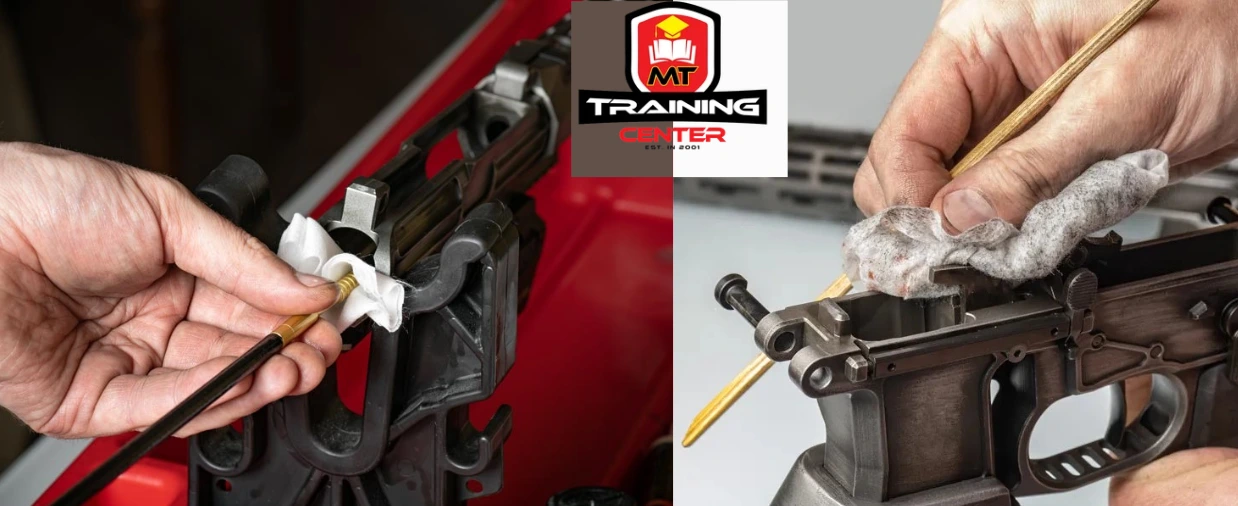
To become a gunsmith, an individual needs technical training, mechanical skills, hands-on experience and an understanding of firearm safety and licensing requirements. Most aspiring gunsmiths begin with a vocational training program, trade school or supervised apprenticeship.
Depending on the training path, preparation may take several months to two years or longer. Career opportunities include firearm repair, restoration, customization and work with licensed firearms businesses. Choosing the right education, understanding school costs and developing practical skills are essential steps toward entering the gunsmithing profession.
How to Become a Gunsmith: 6 Steps to Start a Career
To become a gunsmith, aspiring professionals should complete foundational education, develop practical skills, gain supervised experience, understand legal requirements and pursue suitable employment. Here is the step by step guide:
Step 1: Learn Firearm Safety and Mechanical Fundamentals
Start with firearm safety, mechanical principles and basic firearm technology. A solid foundation includes technical drawing, blueprint reading and an understanding of how mechanical systems function.
Step 2: Choose a Gunsmithing Training Program
Compare gunsmithing courses offered through a technical school, trade school or college. Choose a gunsmithing program with a clear curriculum, qualified instructors and practical instruction.
Step 3: Develop Technical Skills
Build mechanical skills through vocational training covering metalworking, machining and precision measurement. Students should become familiar with appropriate hand tools and machine tools under qualified supervision.
Step 4: Gain Supervised Workshop Experience
Hands-on training helps students apply classroom knowledge. Workshop training, instructor-led training and on-the-job training develop confidence while reinforcing professional safety procedures.
Step 5: Understand Certification and Licensing
Review gunsmithing certification, applicable licensing requirements and professional qualifications. Educational certificates establish training completion but do not replace required business licenses.
Step 6: Find Employment or Explore Business Ownership
Entry-level candidates can approach established shops, repair businesses and employers in the firearms industry. Experienced professionals may later consider self-employment, subject to applicable licensing.
What Does a Gunsmith Do?
A gunsmith professionally inspects, maintains, repairs, restores or customizes firearms. The exact job responsibilities depend on the employer, technical specialization and legally authorized activities.
Common Gunsmith Responsibilities
Typical daily responsibilities include:
- Firearm inspection and condition assessment.
- Firearm maintenance and authorized repair services.
- Troubleshooting mechanical problems.
- Quality control and service documentation.
- Customer communication and safety checks.
A gunsmithing workplace may be a retail repair department, specialist workshop or licensed business.
Gunsmithing Specializations
Experienced professionals may pursue firearm restoration, antique firearm restoration, firearm customization, metal finishing, woodworking or stock refinishing.
Other career directions involve precision machining, metalworking techniques and custom craftsmanship. Students interested in developing specialized technical skills can explore advanced gunsmithing training, including CNC operations and precision shop work.
What Education Is Needed to Become a Gunsmith?
Gunsmithing education can include a vocational certificate, an associate degree or supervised workplace learning. A high school diploma or equivalent is commonly relevant to admission, although specific educational qualifications vary.
Students considering other skilled trades can also compare the vocational training programs available at MT Training Center.
Gunsmithing Schools and College Programs
A gunsmithing school may offer a certificate program or an associate degree combining technical education with practical coursework.
For example, Trinidad State College’s gunsmithing program offers a two-year degree pathway.
Prospective students should compare technical colleges, gunsmithing trade schools and training institutions, checking accreditation, course requirements, facilities and total cost.
Online Gunsmithing Courses vs. Hands-On Training
Online gunsmithing courses can support theoretical learning, but they cannot fully replace supervised practical work.
For a beginner, classroom instruction, professional instruction and structured student training provide stronger opportunities to demonstrate competence. A suitable educational pathway should match the student’s learning style and employment goals.
Can Someone Learn Through a Gunsmith Apprenticeship?
A gunsmith apprenticeship offers practical learning under an experienced gunsmith. An apprenticeship program may include mentorship, professional supervision and supervised instruction.
This approach develops real-world experience, although formal opportunities vary by location and employer.
Gunsmith Training Options: Summarized Comparison Table
The right training program depends on budget, scheduling, career goals and access to supervised facilities.
|
Training pathway |
Typical duration |
Primary advantage |
|
Certificate program |
Varies by provider |
Focused vocational training |
|
Associate degree |
Commonly 2 years |
Broader structured education |
|
Apprenticeship |
Employer-dependent |
Supervised workplace experience |
|
Online courses |
Varies |
Flexible theoretical study |
Program duration alone should not determine the decision. Students should evaluate instructor access, workshop facilities and employer relevance.
How Long Does It Take to Become a Gunsmith?
Becoming professionally prepared can take several months to multiple years, depending on the course, prior experience and required competencies. A two-year degree is one established pathway, but no single timeline applies to everyone.
For example, MT Training Center’s Gunsmithing Training Program includes 1,540 clock hours, with a 44-week daytime schedule or a 62-week evening schedule.
Specialized training, practical training and work experience influence readiness more than course completion alone. Someone with previous CNC machining experience may already understand precision manufacturing concepts, while a beginner may need additional time to develop technical proficiency.
How Much Does Gunsmithing School Cost?
Gunsmithing school costs depend on tuition, program length, residency, equipment and living expenses. Students should request a complete cost breakdown before enrolling.
For a real-world example, MT Training Center currently lists total tuition and registration fees of $37,500 for Gunsmithing and $35,970 for Advanced Gunsmithing. Students should confirm current pricing and eligibility directly with the school.
Additional expenses may include protective equipment, transportation, textbooks and training materials.
A realistic budget should compare tuition with available financial assistance options, scholarship eligibility and the practical value of the training.
What Certifications and Licenses Do Gunsmiths Need?
A professional gunsmith does not automatically need a particular academic credential, but regulated business activities may require federal licensing. Employees working within an appropriately licensed employer’s business generally do not need a separate individual federal license solely for that employment.
Gunsmithing Certification vs. Federal Firearms Licensing
Gunsmithing certification documents education or assessed competence. A Federal Firearms License (FFL) authorizes specified regulated business activities.
The Bureau of Alcohol, Tobacco, Firearms and Explosives (ATF) identifies Type 01 licensing as including gunsmiths.
The distinction matters: completing training does not independently authorize someone to operate a regulated firearms business.
Federal, State and Local Requirements
Federal firearms regulations, state firearms laws and local firearms regulations determine applicable obligations.
The ATF evaluates federal applications, which can involve a background check and compliance with other eligibility requirements.
Business licensing, zoning, recordkeeping, workplace regulations and other firearms industry regulations may also apply. Activities classified as manufacturing require separate consideration.
A prospective owner should verify legal compliance and current requirements directly with the appropriate authorities before accepting regulated work.
What Skills Does a Professional Gunsmith Need?
A professional gunsmith needs mechanical aptitude, attention to detail and the ability to evaluate mechanical problems without compromising safety.
Important competencies include:
- Problem-solving skills, critical thinking and mechanical troubleshooting.
- Manual dexterity, precision and accuracy and patience.
- Technical knowledge and practical problem-solving.
- Communication skills, customer relations and customer service.
- Workshop safety, safety awareness and responsibility.
- Professional ethics, continuous learning and respect for industry standards.
These abilities support safe performance and long-term skill development.
How Much Do Gunsmiths Make?
Gunsmith salary depends on experience, geographic location, employer, specialization and whether the professional is employed or operates a business.
The Bureau of Labor Statistics (BLS) publishes broader occupational wage data, but these figures should not be presented as a verified national gunsmith-specific salary.
Before comparing gunsmithing jobs, candidates should evaluate actual job advertisements, compensation structures and regional demand.
An independent gunsmith may generate business revenue but must also cover equipment, insurance, facilities, taxes and operating expenses.
Is Gunsmithing a Good Career?
Gunsmithing as a career can suit people who enjoy technical work, careful inspection and continuous learning. However, employment prospects vary by location, employer needs and specialization.
Gunsmith Job Outlook and Employment Opportunities
Potential employment opportunities exist with firearms retailers, gun shops, firearms manufacturers and specialist gunsmithing workshops.
A candidate exploring a career in gunsmithing should research local job opportunities rather than assume consistent nationwide demand.
Career Growth and Specialization
Career advancement may involve supervisory duties, niche repair services or further professional development.
Professional networking through relevant professional gunsmithing organizations, including educational offerings associated with the National Rifle Association (NRA), can help candidates explore the gunsmithing industry.
How to Start a Gunsmithing Career or Business
To pursue gunsmithing jobs, candidates should document training, demonstrate safety knowledge and apply for appropriate entry-level positions.
Prospective students can also review admission requirements before choosing a training program.
Finding Entry-Level Gunsmith Jobs
An entry-level gunsmith may begin with supervised shop duties and on-the-job training.
Employers may evaluate entry-level experience, technical assessments and the ability to follow instructions. This provides valuable workshop experience for future career progression.
Starting an Independent Gunsmithing Business
A self-employed gunsmith must evaluate entrepreneurship, business management, insurance, premises and applicable licensing.
Operating an independent business requires different planning from working for an established licensee.
Gunsmith Career Readiness: Five Essential Checks
A realistic gunsmithing career path measures readiness through demonstrated competence rather than graduation alone.
- Education: Appropriate career-focused education and verified professional credentials.
- Skills: Demonstrated technical proficiency and practical competence.
- Experience: Supervised work and evidence of reliable performance.
- Legal readiness: Understanding licensing, safety and relevant industry standards.
- Employment readiness: Clear goals, references and awareness of local career opportunities.
These checks help determine whether additional training is needed before entering the gunsmithing profession.
Key Takeaways: Becoming a Gunsmith
- A degree is not universally required to become a gunsmith.
- Gunsmithing training should combine theory with practical experience.
- Training duration varies by educational route.
- Employment and independent business licensing are different legal situations.
- Career outlook depends on local demand and demonstrated skills.
- The most useful next step is comparing training providers, including the programs offered by MT Training Center and researching regional employers.
Frequently Asked Questions About Becoming a Gunsmith
Is it hard to become a gunsmith?
Becoming a gunsmith can be challenging for beginners because it requires mechanical skills, precision, firearm safety knowledge and hands-on training.
However, someone with an interest in mechanical work can develop these skills through a structured gunsmithing program, supervised practice and practical experience. Previous experience with machining or metalworking can make the learning process easier.
Do gunsmiths make a lot of money?
Gunsmiths can earn a good income, but not every gunsmith makes a lot of money. Earnings depend on experience, location, specialization and whether they work for an employer or run their own business.
Experienced gunsmiths offering specialized services may have greater earning potential, although business expenses can significantly affect their take-home income.
How many years does it take to become a gunsmith?
It typically takes about 1 to 2 years to complete a structured gunsmithing education program, although shorter certificate courses and longer training pathways are available.
An associate degree commonly takes two years, while apprenticeships vary in duration. Developing the skills needed to work independently may require additional supervised experience.
How much does gunsmith school cost?
Gunsmith school costs vary widely depending on the institution, program length, residency status and type of training.
For example, MT Training Center currently lists total tuition and registration fees for its standard Gunsmithing program. Students should also budget for additional educational expenses and compare available financial aid options.
Can someone become a gunsmith without a college degree?
Yes, someone can become a gunsmith without a college degree. Many aspiring gunsmiths develop their skills through vocational training, certificate programs, apprenticeships or supervised work experience. Employers may value practical mechanical skills, firearm safety knowledge and demonstrated technical competence alongside formal education.
Can someone learn gunsmithing online?
Yes, someone can learn the theoretical foundations of gunsmithing online through courses covering firearm mechanics, safety and technical concepts.
However, online learning alone may not provide sufficient hands-on experience for professional work. Supervised practical training is important for developing and demonstrating technical skills.
Does a gunsmith need a Federal Firearms License (FFL)?
A gunsmith generally needs an appropriate Federal Firearms License (FFL) when independently operating a business that performs regulated gunsmithing activities.
However, an employee working within an appropriately licensed firearms business generally does not need a separate individual FFL solely for that employment. Requirements depend on the activities performed and applicable federal, state and local laws.
Is gunsmithing a good career for beginners?
Gunsmithing can be a good career for beginners who enjoy mechanical work, problem-solving and hands-on technical tasks.
Entry-level training provides a foundation for developing professional skills, while supervised experience helps prepare students for employment. Career opportunities depend on regional demand, qualifications and practical experience.