Choosing a career does not always require spending four years in a classroom. For many students, career changers, and hands-on learners, skilled trades training provides a direct path to developing technical skills employers need today.
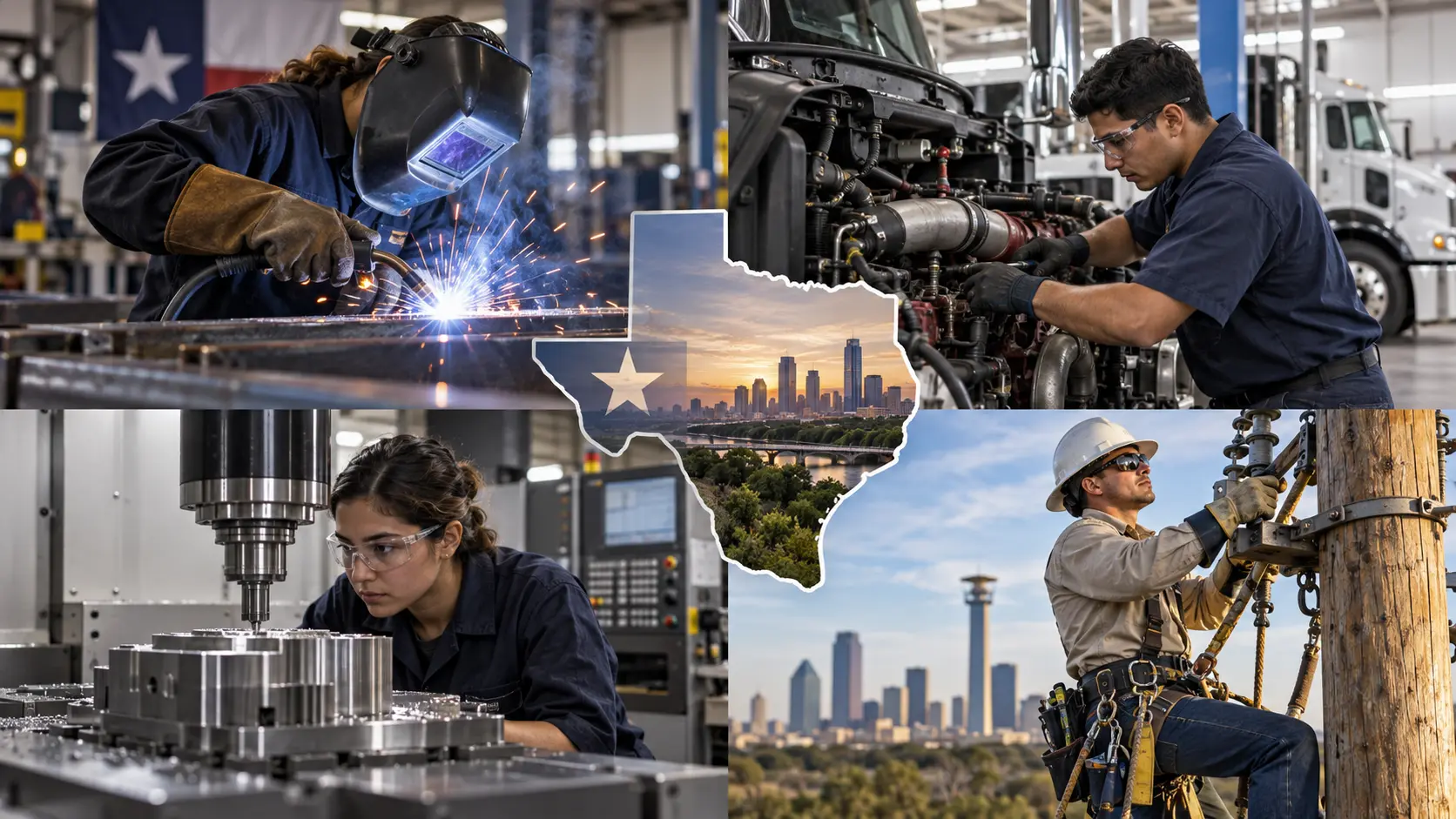
From CNC machining and welding to diesel technology and electrical linework, skilled trade professionals build, repair, and maintain the systems that keep industries running. These careers require more than physical ability; they combine technical knowledge, problem-solving, safety awareness, and specialized equipment skills.
As industries continue searching for qualified workers, trade careers are creating new opportunities for people who want practical training and a clear career direction. This guide explains how skilled trades training works, which programs to consider, and how to choose the right path for your goals.
What Is Skilled Trades Training?
Skilled trades training is a career-focused framework designed to teach the precise practical and technical skills required for a specific occupation. Unlike a traditional four-year academic degree that covers generalized subjects, trade school training drops you directly into a focused environment.
A high-quality curriculum combines essential classroom theory with intensive, hands-on laboratory practice. Students spend their time mastering industry-specific tools, processing workflows, technical terminology and critical safety procedures. For example:
- Welding students master multi-process arc welding machines.
- CNC students program high-precision manufacturing equipment.
- Diesel tech students learn advanced engine diagnostics and heavy truck systems.
- Electrical lineworkers train on power grids, utility equipment and elevated climbing tools.
Why Choose a Career in the Skilled Trades?
Skilled trades can be a strong career option for people who prefer practical training and want to develop skills that apply directly to technical work.
Careers in welding, diesel technology, CNC machining and electrical linework can lead to opportunities across manufacturing, transportation, construction, utilities and other industries. Career prospects, pay and advancement opportunities vary by trade, location, experience and employer.
For students who enjoy working with equipment, solving technical problems and learning through hands-on practice, skilled trades training can provide a practical path toward an entry-level technical career.
Practical Skills Have Real Value
Technical proficiency cannot be learned purely out of a textbook. While a classroom provides the basic blueprint, hands-on shop floor execution teaches a student how to manage thermal properties, recognize mechanical variances, troubleshoot errors and perfect their physical technique.
In high-stakes fields where precision and strict workplace safety are non-negotiable, this repetitive, real-world practice is what separates a novice from a professional.
Who Is a Good Fit for Skilled Trades Training?
If you enjoy active problem-solving and prefer working with your hands rather than staying cooped up in a cubicle all day, you are already a prime candidate for trade school. While technical skills can be taught from scratch, having a foundational mindset geared toward the following traits will help you accelerate your success:
Skills That Help Students Succeed in Skilled Trades
- Attention to Detail: Important when working with measurements, technical drawings, specifications and equipment.
- Mechanical Reasoning: Helps students understand how machinery, electrical systems, engines and other technical components work together.
- Workplace Professionalism: Communication, reliability, teamwork and following instructions are important in technical work environments.
- Safety Awareness: Students must learn to follow safety procedures, use personal protective equipment and recognize workplace hazards.
Types of Skilled Trades to Consider in Texas
The skilled trades include a wide range of careers across construction, manufacturing, transportation, utilities and equipment service.
For students exploring skilled trades training in Texas, welding, diesel and truck service, CNC machining and electrical linework provide four different career directions to consider. Each involves different tools, work environments, technical skills and physical requirements.
Understanding these differences can help students choose a training path that better matches their interests and long-term career goals.
Welding and Fabrication
Welding involves joining materials using heat, pressure or a combination of processes. Welders may work in fabrication, manufacturing, repair, construction and other industrial settings.
Combination welding training can cover several processes rather than focusing on only one technique.
Students may learn processes such as MIG, TIG, Stick, Flux-Core and pipe welding. Training can also include cutting, equipment setup, blueprint reading, technical math and shop safety.
MT Training Center’s Combination Welding program uses hands-on instruction to help students develop these practical skills. The program currently lists 1210 clock hours and provides day and evening scheduling options.
Best fit: Students who enjoy working with metal, equipment, fabrication and detailed physical work.
Diesel and Truck Service
Diesel and truck service focuses on the systems that keep medium- and heavy-duty vehicles operating.
A diesel technician may work with engines, fuel systems, electrical systems, brakes, steering, suspension, drivetrains and other vehicle components.
Modern truck service also involves electronics and computer-based diagnostics. MT Training Center’s Diesel and Truck Service Technology curriculum includes diesel engine construction and operation, electrical systems, fuel systems, heavy-duty drivetrains, steering and suspension, air and hydraulic brakes, truck electrical and electronics, preventive maintenance and welding.
CNC Machining
CNC machining combines manufacturing knowledge with precision technology.
CNC stands for computer numerical control. CNC equipment follows programmed instructions to perform machining operations with a high level of consistency.
Students in CNC training can encounter areas such as machine operation, measurements, technical drawings, machining processes and manufacturing procedures.
This field can appeal to people who enjoy precision work and technology.
It also requires attention to detail. Small measurement errors can affect the final product..
Electrical Linework
Electrical linework focuses on utility and power systems. It is a technical field that also requires strong attention to safety and physical readiness.
Lineworker training can cover electrical theory, voltage, current, resistance, utility equipment, worksite safety and line construction fundamentals.
MT Training Center’s Advanced Electrical Lineworker program includes training in electrical theory, safety, lineworker tools, bucket trucks, diggers, pole climbing awareness, elevated work safety and utility work fundamentals. The program currently lists 900 clock hours.
Skilled Trades Training Programs at MT Training Center
MT Training Center offers career-focused skilled trades training at its DeSoto, Texas campus, serving students throughout the Dallas-Fort Worth area.
Students can explore training in:
- Combination Welding
- Computer Numerical Control (CNC) Machining
- Diesel and Truck Service Technology
- Advanced Electrical Linework
Each program focuses on a different technical career path and combines classroom instruction with practical training related to the occupation.
The DeSoto campus includes classrooms and specialized training areas, including facilities for welding, CNC machining, diesel technology and electrical linework.
Students should compare the curriculum, training hours, work environment and career requirements of each program before deciding which skilled trade best fits their goals.
Combination Welding Training
Combination Welding is designed for students interested in developing skills across multiple welding processes.
Training includes practical welding and cutting work. Students can also study blueprint reading, technical math, equipment setup, safety and pre-employment skills.
The program includes MIG, TIG, Stick, Flux-Core, pipe welding and cutting processes. The variety matters because welding work can differ by material, process, equipment and work environment.
Students interested in fabrication and industrial work can use this type of training to explore the field before pursuing entry-level opportunities.
Diesel and Truck Service Technology
Diesel and Truck Service Technology is built around medium- and heavy-duty vehicle systems.
Students study how major truck systems operate and how technicians approach maintenance and repair.
The curriculum includes electrical systems, diesel engines, fuel systems, drivetrains, steering, suspension, brakes, truck electronics, service shop management and preventive maintenance.
The program also introduces computer-based service information and diagnostic methods.
This reflects an important change in modern diesel work. Today’s technicians often work with both mechanical components and electronic systems.
CNC Machinist Training
CNC machining is suited to students who enjoy precision and manufacturing. The field requires careful measurement and an understanding of how machines transform raw material into finished components.
Students can develop knowledge related to machining equipment, technical information, measurements and manufacturing processes.
The work also requires consistency. A machinist must pay attention to specifications and understand how small differences can affect a finished part.
MT Training Center lists Computer Numerical Control (CNC) Machinist as one of its current programs and includes a CNC laboratory among its DeSoto facilities.
Advanced Electrical Lineworker Training
Electrical lineworker training introduces students to the technical and safety requirements associated with utility work.
The program covers electrical theory, power fundamentals, utility equipment, safety procedures, field gear, pole line construction, transformers, grounding and related areas.
The work can be physically demanding. It can also involve elevated work and outdoor conditions. Students should understand these expectations before choosing this career path.
What Do Students Learn in Skilled Trades Training?
Although every trade has its own curriculum, many trades training programs share several learning areas.
Technical Knowledge
Students need to understand the systems behind the work.
That can include mechanical principles, electrical concepts, material properties, measurements or manufacturing processes.
Tools and Equipment
Students need to become familiar with the tools used in their field.
Proper tool selection and equipment operation are important parts of technical work.
Safety
Safety is a core part of trade education.
Welding involves heat, electricity, gases and equipment. Diesel service involves heavy vehicles and mechanical systems. Electrical linework involves serious electrical and elevated-work hazards.
Students must understand procedures before performing higher-risk tasks.
Technical Reading
Many trades require workers to interpret technical information.
That may include blueprints, wiring diagrams, service manuals, specifications, measurements or machine instructions.
Problem-Solving
Technical workers often need to identify why something is not working correctly. The solution may require observation, testing, measurement and careful reasoning. That is why career training is more than simply learning how to operate equipment.
Why Hands-On Training Matters
Hands-on training allows students to turn information into practical skill. A classroom can explain how a system works. A laboratory can allow students to interact with that system.
This difference matters.
Repeated practice helps students become familiar with tools and procedures. It also gives instructors opportunities to correct technique and explain mistakes.
MT Training Center describes its vocational approach as hands-on and career-focused. The school states that its instructors help students develop skills and knowledge connected to their chosen careers.
For a student exploring the trades, that practical experience can also provide a better understanding of the daily work involved.
How to Choose the Right Skilled Trade
Choosing a trade should begin with the type of work a student enjoys. The highest-paying job title is not automatically the best choice. A better fit usually comes from matching interests and strengths with the actual demands of the occupation.
Someone Who Enjoys Working With Metal
Combination welding may be worth exploring. The work involves welding processes, fabrication, cutting, equipment and attention to detail.
Someone Who Enjoys Engines
Diesel and Truck Service Technology may be a better match. This path involves mechanical systems, diagnostics, maintenance and repair.
Someone Who Likes Precision
CNC machining can suit people who enjoy measurements, machinery, manufacturing and detailed technical work.
Someone Interested in Electricity and Outdoor Work
Electrical linework may be worth considering. The field involves utility systems, electrical concepts, specialized equipment, safety and physical work.
Students should also consider the work environment. Some trades involve shops or manufacturing facilities. Others involve vehicle service bays or outdoor utility sites.
Welding vs. Diesel vs. CNC vs. Lineworker: Which Skilled Trade Is Best?
The four paths have different day-to-day demands.
| Trade | Main Focus | Typical Work Style |
| Combination Welding | Welding, fabrication, cutting | Hands-on shop work |
| Diesel and Truck Service | Engines, trucks, diagnostics, repair | Mechanical and diagnostic work |
| CNC Machining | Precision manufacturing | Machine and production work |
| Electrical Lineworker | Utility and electrical systems | Field-based technical work |
This comparison can help an undecided student narrow the choices. A person who enjoys fabrication may lean toward welding.
Someone who likes engines may prefer diesel service. A detail-oriented student interested in manufacturing may prefer CNC. Someone comfortable with outdoor and physically demanding work may explore linework.
Students can also compare these paths in greater detail through MT Training Center’s supporting trade comparison content.
Skills That Help Students Succeed in the Trades
Technical ability develops through training and practice. Certain personal skills can also make the learning process easier.
- Attention to detail helps when working with measurements, wiring, specifications and equipment.
- Problem-solving helps when a machine, vehicle or system does not behave as expected.
- Safety awareness matters in every technical environment.
- Communication helps workers understand instructions and work with supervisors, coworkers and customers.
- Reliability matters because technical work often depends on schedules, procedures and teamwork.
- Willingness to learn is equally important.
Technology changes. Equipment changes. Procedures change. A strong technical worker continues learning after completing initial training.
How Long Does Skilled Trades Training Take?
Skilled trades training can vary in length depending on the occupation, program structure and number of required clock hours.
At MT Training Center, program lengths vary by field. Combination Welding currently includes 1,210 clock hours, Advanced Electrical Lineworker training includes 900 clock hours, and Diesel and Truck Service Technology includes 1,320 lecture and lab hours.
A shorter program is not automatically the better option. Students should also compare curriculum depth, hands-on training, equipment, scheduling and how well the program matches their career interests.
What Can Students Do After Skilled Trades Training?
Completing skilled trades training can help students develop the technical knowledge and practical skills needed to pursue entry-level opportunities in their chosen field.
Career outcomes vary based on the student’s skills, qualifications, location, employer requirements and industry conditions, so completing a program does not guarantee a specific position or salary.
After training, graduates may continue developing their careers through workplace experience, industry certifications, specialized training or apprenticeships where applicable.
As experience grows, some skilled trade professionals may move into more specialized technical roles, supervisory positions or other career paths within their industry.
How to Start Skilled Trades Training in Texas
The first step is choosing a skilled trade that matches your interests, strengths and preferred work environment.
Before selecting a program, consider questions such as:
- Do you enjoy mechanical, electrical, manufacturing or fabrication work?
- Would you rather work indoors, outdoors or in a combination of environments?
- Are you comfortable working with tools, machinery or technical equipment?
- How physically demanding is the occupation?
- What type of technical problems do you enjoy solving?
- What education, training or certifications may be required for the career?
Once you have identified a potential career path, compare skilled trades training programs in Texas based on curriculum, hands-on experience, training hours, facilities, scheduling and career preparation.
Why Consider MT Training Center?
MT Training Center has provided vocational education in Texas since 2001. Its DeSoto campus serves the Dallas-Fort Worth area and includes classrooms, laboratories and specialized training spaces for several technical programs.
MT Training Center is accredited by the Council on Occupational Education and approved and regulated by the Texas Workforce Commission’s Career Schools and Colleges Section.
Students at the DeSoto campus can explore programs including Combination Welding, CNC Machinist, Diesel and Truck Service Technology and Advanced Electrical Lineworker.
Having several skilled trades programs available in one training environment allows prospective students to compare different career paths before deciding which option best fits their goals.
MT Training Center also operates a Humble location offering CDL training.
Start Your Skilled Trades Training at MT Training Center
If you are considering a hands-on technical career, MT Training Center offers career-focused vocational training designed to help students develop practical skills for entry-level opportunities in the skilled trades.
At our DeSoto, Texas campus, students can train in specialized learning environments while developing technical knowledge and hands-on experience related to their chosen field.
Explore our skilled trades programs, compare your options and speak with the admissions team to find a training path that fits your career goals.
Financial aid may be available to those who qualify for eligible programs.
Frequently Asked Questions
What is the quickest skilled trade to learn?
The quickest skilled trades to learn are typically those offered through accelerated vocational programs, which can be completed in 7 to 12 months instead of a traditional multi-year degree. Programs like Combination Welding and Advanced Electrical Linework allow students to move rapidly through safety and tool fundamentals, getting them out of the classroom and onto a high-paying job site in less than a year.
What is the highest-paying skilled trade?
While salaries vary based on experience, location and specialization, Advanced Electrical Lineworkers and specialized industrial Combination Welders (such as pipe or underwater welders) consistently rank among the highest-earning trade professionals. Industrial sectors like commercial power grid maintenance, petroleum piping and heavy equipment tech offer massive income potential, lucrative overtime opportunities and excellent benefits packages.
How do I get into the skilled trades?
One way to enter the skilled trades is through vocational or career-focused training that combines technical instruction with hands-on practice.
Start by choosing a trade that interests you, researching its training and certification requirements, and comparing programs based on curriculum, facilities, training hours and career preparation.
After completing training, students may pursue entry-level employment, additional certifications or apprenticeships where applicable.
What are the best skilled trades to get into?
The best skilled trade depends on your interests, strengths, preferred work environment and career goals.
Students who enjoy fabrication may consider welding. Those interested in engines and diagnostics may prefer diesel technology. CNC machining can suit people interested in precision manufacturing, while electrical linework may appeal to those comfortable with outdoor and physically demanding technical work.
Before choosing a trade, compare training requirements, local career opportunities, work conditions and long-term career paths.