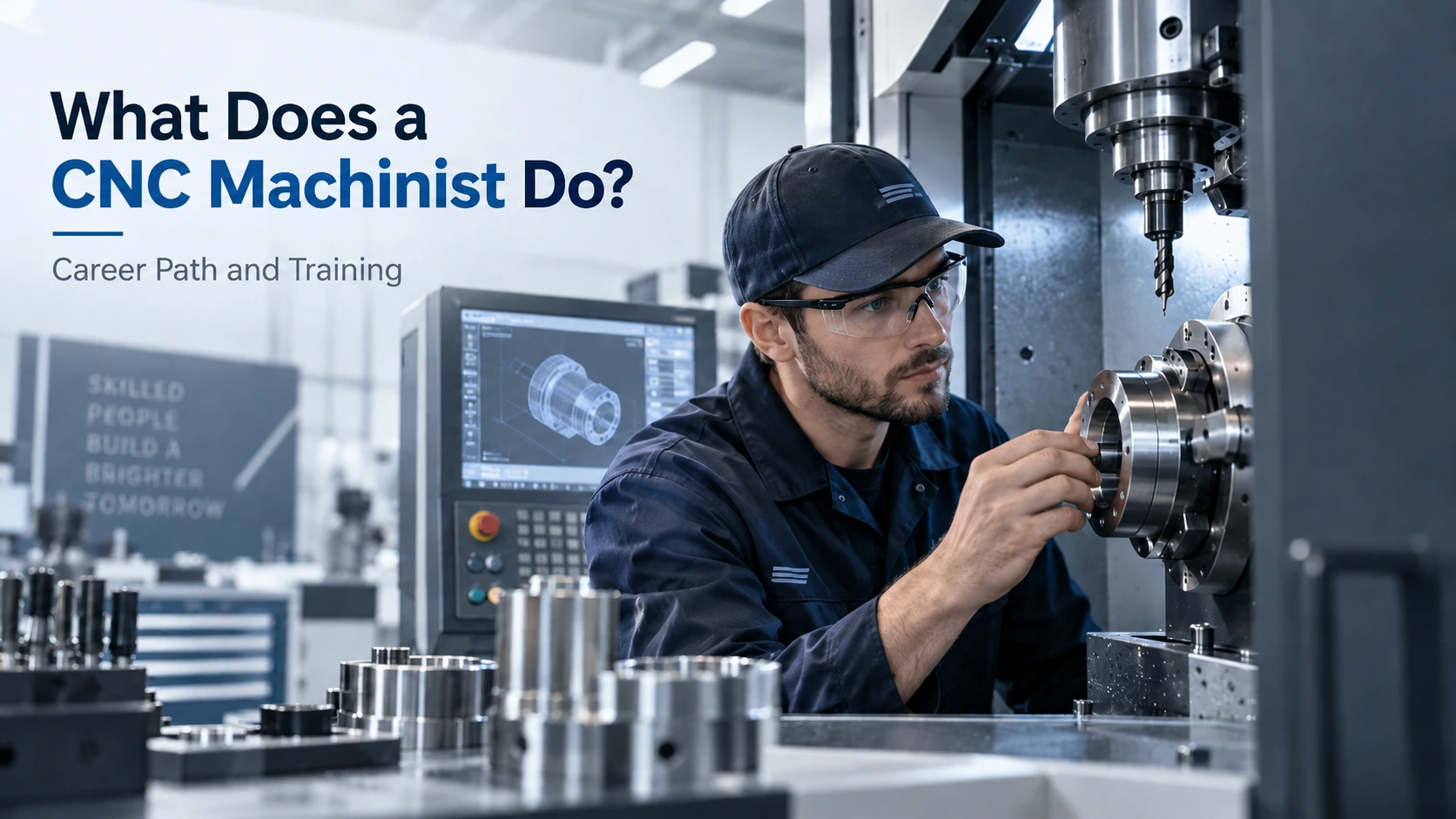
A CNC machinist is responsible for transforming digital designs and raw materials into precise components used in industries such as aerospace, automotive, medical manufacturing and industrial equipment. Unlike traditional manufacturing roles, modern CNC machining combines machine operation, computer technology, programming and problem-solving skills.
A successful CNC machinist does more than operate equipment. They understand how materials behave, how tools interact with machines and how small adjustments can impact the accuracy of a finished part.
For someone considering a skilled-trade career, CNC machining offers a pathway that blends hands-on work with advanced manufacturing technology. The journey can begin with technical training and grow into roles involving CNC programming, CAD/CAM, automation and manufacturing leadership.
Understanding the Role of a CNC Machinist in Modern Manufacturing
What a CNC Machinist Does During a Typical Workday
A CNC machinist spends the day preparing, operating, monitoring and improving machining processes that create precision parts. Their responsibilities depend on experience level, but the role usually involves machine setup, programming adjustments, quality checks and troubleshooting.
A typical day may begin with reviewing technical drawings and production requirements. The machinist then selects the correct tools, loads materials, sets machine parameters and verifies that the final component meets exact specifications.
For example, a CNC machinist producing an aerospace component may work with tight tolerances where even a small measurement error can affect the final product. This requires technical knowledge, attention to detail and strong quality control habits.
How CNC Machinists Use Machines, Computers and Technical Skills Together
Modern CNC machining is a combination of mechanical ability and digital technology. CNC machines follow programmed instructions, but skilled machinists are responsible for creating accurate results.
Machinists use Computer Numerical Control (CNC) systems to control equipment such as CNC milling machines and CNC lathes. They may adjust programs, change cutting tools and optimize machining processes to improve accuracy and efficiency.
Many professionals also work with CAD/CAM software, which allows engineers and machinists to convert digital designs into machine instructions. This connection between computers and physical manufacturing is what makes CNC machining different from many traditional trade careers.
The Difference Between a CNC Operator and a CNC Machinist
The terms CNC operator and CNC machinist are often used interchangeably, but there is an important difference.
A CNC operator typically focuses on running existing programs, loading materials, checking parts and maintaining production flow. They follow established processes and gain experience with machine operation.
A CNC machinist usually has deeper technical responsibilities, including:
- Setting up machines from the beginning
- Selecting cutting tools
- Adjusting machining parameters
- Reading blueprints
- Troubleshooting production issues
- Performing precision measurements
Many CNC professionals start as operators and gradually develop into machinists by gaining hands-on experience and technical training.
Why CNC Machining Is Considered a Technology-Driven Skilled Trade
CNC machining represents the evolution of skilled trades. It combines traditional mechanical knowledge with modern manufacturing systems.
A machinist today may need to understand G-code programming, digital measurements, automation systems and advanced manufacturing techniques. These skills make CNC professionals valuable in industries where accuracy and efficiency are critical.
The strongest CNC careers are built by people who develop both sides of the profession: understanding how machines work physically while also learning the digital tools that control them.
The Core Responsibilities and Daily Tasks of a CNC Machinist
Setting Up and Operating CNC Machines for Precision Manufacturing
Machine setup is one of the most important responsibilities of a CNC machinist. Before production begins, the machinist must install tools, secure materials, load programs and verify machine settings.
A small setup mistake can lead to wasted materials, damaged tools or incorrect parts. Skilled machinists reduce these risks by following precise procedures and understanding machining principles.
Reading Blueprints, Technical Drawings and Manufacturing Specifications
Blueprint reading is a fundamental CNC skill. Machinists use technical drawings to understand dimensions, tolerances, materials and finishing requirements.
For example, a manufacturing drawing may specify that a component must be produced within a very small tolerance range. The machinist must understand these requirements before selecting tools or adjusting machine settings.
Strong blueprint-reading skills allow machinists to move beyond machine operation and become valuable problem solvers on the production floor.
Selecting Tools, Materials and Machine Settings for Production
Different materials require different machining approaches. A CNC machinist must understand how metals such as aluminum, steel and titanium respond during cutting.
Tool selection, cutting speed, feed rate and machine settings all influence the final quality of a part.
Experienced machinists know that improving production is not always about running machines faster. It is about finding the right balance between speed, accuracy, tool life and product quality.
Programming and Adjusting CNC Machines Using G-Code and Software
CNC machines rely on programming instructions to perform precise movements. Machinists often work with G-code, which controls machine operations such as positioning, cutting and tool movement.
Advanced CNC professionals may also use CAD/CAM software to create or modify machining programs.
Learning programming skills creates opportunities for career advancement because companies increasingly need workers who can improve processes, not just operate equipment.
Inspecting Finished Parts and Maintaining Quality Standards
Quality control is a major part of CNC machining. Machinists use measurement equipment such as calipers, micrometers and precision gauges to verify finished components.
A part may look correct but still fail if it does not meet exact measurements. Skilled machinists understand that inspection is not just the final step; it is part of maintaining consistent manufacturing quality.
Troubleshooting Machining Problems and Improving Production Processes
CNC machinists are often problem solvers. When a machine produces inaccurate parts, unusual tool wear or surface defects, the machinist investigates the cause.
Common issues may include incorrect settings, worn cutting tools, improper material handling or programming errors.
The ability to diagnose problems separates entry-level operators from experienced manufacturing professionals.
The Skills You Need to Become a Successful CNC Machinist
Mechanical Skills and Understanding of Machining Principles
A strong CNC machinist understands how machines, materials and tools work together. Mechanical knowledge helps professionals identify issues quickly and make better production decisions.
Understanding concepts such as cutting forces, material properties and machine components creates a stronger foundation for long-term growth.
Blueprint Reading and Mathematical Skills for Precision Work
CNC machining requires accuracy. Professionals regularly use measurements, calculations and technical information to produce parts that meet exact specifications.
Basic mathematics, geometry and measurement skills are essential for interpreting designs and maintaining precision.
Computer Skills, CNC Programming and CAD/CAM Knowledge
Modern CNC careers require digital skills. Professionals who understand CNC programming, CAD/CAM systems and manufacturing software often have more advancement opportunities.
As manufacturing becomes more automated, digital knowledge will continue to separate entry-level workers from advanced technicians.
Problem-Solving Skills for Machine Adjustments and Repairs
Manufacturing environments rarely operate without challenges. CNC machinists must analyze problems and make adjustments quickly.
Employers value machinists who can reduce downtime, improve processes and maintain production quality.
Attention to Detail and Safety Awareness in Manufacturing Environments
Precision manufacturing requires discipline. A machinist must follow safety procedures, maintain equipment properly and consistently produce accurate parts.
Attention to detail protects both the worker and the final product.
The CNC Machinist Career Path: From Beginner to Advanced Manufacturing Professional
Stage 1: Starting as a CNC Operator and Learning Production Basics
Many CNC careers begin with an entry-level operator position. At this stage, professionals learn:
- CNC machine operation
- Material loading procedures
- Basic inspection methods
- Workplace safety standards
- Following existing machine programs
This stage builds confidence and introduces beginners to real manufacturing environments.
Stage 2: Becoming a Skilled CNC Machinist Through Hands-On Experience
With experience, CNC operators move into machinist roles with greater responsibility. They begin handling:
- Machine setup
- Tool selection
- Program adjustments
- Quality inspections
- Production improvements
Hands-on experience combined with formal training helps professionals become more independent.
Stage 3: Advancing Into CNC Programming and Manufacturing Technology Roles
Experienced machinists can advance into programming and technical roles.
These positions often involve:
- Creating and editing G-code programs
- Working with CAD/CAM software
- Improving machining efficiency
- Developing advanced manufacturing processes
This stage is where CNC machining becomes a highly technical career.
Stage 4: Moving Into Specialized Manufacturing or Leadership Positions
Experienced CNC professionals can specialize in high-value industries or leadership roles.
Career opportunities include:
- Aerospace machining specialist
- Medical device manufacturing technician
- Automation specialist
- CNC supervisor
- Production manager
Many training programs, such as those offered through MT Training Center, help students build foundational skills needed for technical manufacturing careers.
How CNC Machinist Training Programs Prepare You for a Manufacturing Career
What You Learn in a CNC Machining Training Program
A quality CNC training program focuses on practical skills employers need.
Students typically learn:
- CNC machine operation
- Blueprint reading
- Precision measurement
- CNC programming fundamentals
- Safety procedures
- Manufacturing processes
Programs such as the CNC Machinist training pathway at MT Training Center CNC Machinist Program combine technical instruction with hands-on practice.
Hands-On Practice With CNC Machines and Manufacturing Equipment
Hands-on training is essential because CNC machining is a practical profession.
Students need experience working with real equipment, measuring tools and production processes before entering the workforce.
The goal of training is not only understanding concepts but developing confidence operating machines in real manufacturing situations.
How Trade Schools Help Beginners Build Job-Ready Skills
Trade schools provide a structured pathway for people entering manufacturing without previous experience.
Instead of learning randomly on the job, students develop foundational skills through guided instruction and practical exercises.
This approach helps career changers, high school graduates and entry-level workers transition into technical careers faster.
CNC Training Timeline: How Long Does It Take to Become a CNC Machinist?
The timeline depends on the program format and career goals.
Some students can gain entry-level skills within several months, while advanced CNC programming and machining expertise require additional experience.
The fastest path usually combines technical training with hands-on workplace experience.
CNC Machinist vs Other Skilled Trades: Which Career Path Fits You Better?
CNC Machining Compared With Welding, Electrical and Diesel Careers
Each skilled trade requires different strengths. CNC machining is ideal for people who enjoy technology, precision work and solving technical problems.
Differences in Work Environment, Skills and Career Growth
| Career Path | Main Skills | Work Environment | Training Focus | Growth Opportunities |
| CNC Machinist | Precision machining, programming, technical skills | Manufacturing facilities | CNC operation, CAD/CAM, machining | Programmer, specialist, supervisor |
| Welder | Fabrication, metal joining | Construction and manufacturing | Welding techniques, safety | Fabricator, inspector, welding specialist |
| Diesel Mechanic | Mechanical repair, diagnostics | Fleets, repair shops, equipment facilities | Engine systems, electrical diagnostics | Master technician, fleet specialist |
| Electrician | Electrical systems, installation | Residential, commercial, industrial | Wiring, electrical codes | Journeyman, contractor, specialist |
Why CNC Machining Appeals to People Who Enjoy Technology and Problem Solving
CNC machining attracts individuals who enjoy building things while working with technology.
Unlike some trades focused mainly on installation or repair, CNC professionals create highly precise components through a combination of programming, engineering concepts and hands-on skills.
For people interested in the future of manufacturing, CNC machining provides a pathway into advanced technology careers.
Where CNC Machinists Work and What Industries Depend on Their Skills
Aerospace and Defense Manufacturing
Aerospace companies depend on CNC machinists to produce components where accuracy and reliability are critical. These roles often involve advanced materials and strict quality requirements.
Medical Device and Precision Equipment Manufacturing
Medical manufacturing requires extremely precise components used in surgical tools, implants and specialized equipment.
CNC machinists play an important role in producing these high-quality products.
Automotive and Transportation Industries
Automotive manufacturers use CNC machining for engine components, transmission parts and specialized equipment.
The industry continues adopting automation, creating demand for skilled CNC professionals.
Industrial Equipment and Advanced Manufacturing Companies
Many industrial companies rely on CNC machinists to create custom parts, machinery components and production equipment.
As manufacturing technology evolves, skilled machinists remain essential.
Career Opportunities, Advancement Options and Future Demand for CNC Machinists
Entry-Level CNC Jobs You Can Pursue After Training
Common entry-level roles include:
- CNC operator
- Machine technician trainee
- Production machinist assistant
- Manufacturing technician
These positions provide the experience needed for advancement.
Advanced Career Paths Beyond Traditional CNC Machining
Experienced professionals may move into:
- CNC programmer
- Manufacturing technician
- Quality specialist
- Automation technician
- Production supervisor
How Automation and Technology Are Changing CNC Careers
Automation is changing manufacturing, but it is increasing the need for skilled workers who understand technology.
The future CNC machinist will not simply operate machines. They will manage digital manufacturing systems and optimize production.
Why Digital Manufacturing Skills Are Becoming More Valuable
Companies increasingly look for professionals who understand both machining and software.
Learning programming, automation and digital manufacturing tools can create stronger long-term career opportunities.
Key Takeaways Before Choosing CNC Machining as a Career
What Makes CNC Machining a Strong Skilled-Trade Career Choice
- CNC machining combines hands-on work with advanced technology.
- Beginners can enter the field through focused technical training.
- Strong CNC professionals develop both mechanical and digital skills.
- Career growth depends on learning programming, automation and advanced manufacturing techniques.
- CNC machining offers opportunities across multiple high-value industries.
Start Your CNC Machining Career With the Right Training Path
Identify the CNC Skills You Want to Build First
Start by developing core skills such as blueprint reading, measurement, machine operation and technical problem solving.
Choose a Training Program That Provides Real Equipment Experience
The best CNC training programs combine classroom knowledge with practical machine experience.
Hands-on learning helps students build confidence before entering professional manufacturing environments.
Develop Practical Skills That Employers Look For in CNC Machinists
Employers value machinists who can operate equipment, understand processes, troubleshoot problems and continue learning new technology.
Take the First Step Toward a Career in Precision Manufacturing
CNC machining offers a career path for people who want a technical, hands-on profession with opportunities for growth. With the right training and practical experience, beginners can build skills that lead to long-term opportunities in modern manufacturing.
Take the Next Step Toward a CNC Machining Career
Starting a CNC machining career begins with building the right foundation. Focus on developing essential skills like blueprint reading, precision measurement, machine operation, and CNC programming basics before advancing into specialized areas.
A hands-on training program can help you gain practical experience with CNC equipment and understand the real-world processes used in modern manufacturing. Programs like the CNC Machinist training program at MT Training Center are designed to help students build job-ready skills through technical instruction and practical training. MT Training Center CNC Machinist Program
If you are ready to begin a technical career with long-term growth opportunities, explore CNC training options and take your first step toward becoming a skilled CNC machinist.
Frequently Asked Questions About Becoming a CNC Machinist
What are the career paths for CNC machinists?
CNC machinists can advance from entry-level machine operators to CNC programmers, manufacturing technicians, quality specialists, supervisors and production managers. Many professionals also specialize in industries like aerospace, medical manufacturing, automotive and industrial equipment.
Career growth usually comes from gaining hands-on experience, learning CNC programming, mastering CAD/CAM software and developing advanced machining skills.
Is CNC machining well paid?
Yes, CNC machining can provide a strong income, especially as professionals gain experience and advanced technical skills. Entry-level positions may start with machine operation responsibilities, while experienced CNC machinists, programmers and specialists often earn higher wages due to their ability to manage complex manufacturing processes.
Pay can vary based on location, industry, certifications, experience level and knowledge of advanced skills such as G-code programming and automation systems.
How long does it take to become a CNC machinist?
The time required depends on the training path and career goals. Many beginners can develop entry-level CNC skills through a focused technical program within several months, while becoming an advanced CNC machinist requires additional workplace experience.
A typical pathway includes learning machine operation, blueprint reading, precision measurement, CNC programming basics and gaining hands-on manufacturing experience.
Is it worth becoming a CNC machinist?
CNC machining can be a rewarding career choice for people who enjoy technology, problem-solving and hands-on work. It offers opportunities across industries such as aerospace, medical manufacturing, automotive and advanced manufacturing.
The career is especially valuable for individuals who continue developing digital skills like CAD/CAM, programming and automation, as modern manufacturing increasingly depends on skilled technical professionals.